The search for effective climate solutions increasingly looks to marine ecosystems. Coastal and open-ocean systems drive blue carbon storage—the capture and isolation of atmospheric carbon dioxide (CO2) by marine organism.
At the heart of this marine carbon sequestration engine are two very different organisms working in tandem: Microalgae and Mollusks (Oysters).
Microalgae: Photosynthetic Powerhouses
Microalgae (phytoplankton) are responsible for roughly half of all photosynthetic activity on Earth. Despite making up less than 1% of global plant biomass, their rapid reproduction cycle makes them exceptionally efficient carbon biological pumps.
Photosynthetic Capture: Microalgae take up dissolved inorganic carbon (CO2 or HCO3–) and convert it into organic carbon via photosynthesis:
6CO2 + 6H2O + sunlight → C6H12O6 + 6O2
The Biological Carbon Pump: When microalgae die or are eaten, a portion of their organic carbon sinks into the deep ocean sediment. Once buried in these anaerobic benthic layers, the carbon can remain locked away for hundreds to thousands of years rather than recycling back into the atmosphere.
Oysters: Ecosystem Engineers & Carbon Vaults
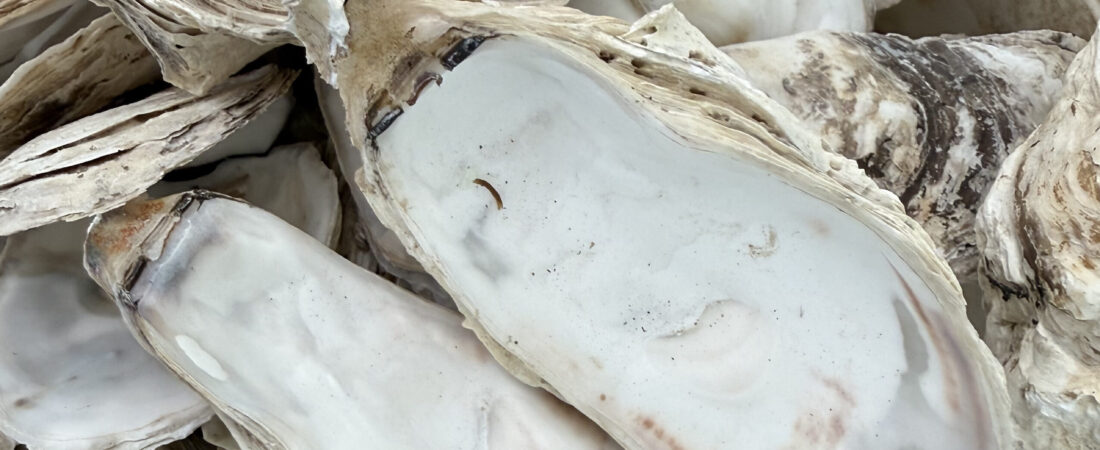
Oysters contribute to carbon sequestration through two key pathways: biological tissue growth and shell formation.
Shell Calcification: Oysters pull dissolved calcium (Ca2+) and bicarbonate (HCO3–) from seawater to construct their shells out of calcium carbonate (CaCO3):
Ca2+ + 2HCO3– → CaCO3 + H2O + CO2
While calcification releases a small amount of CO2 back into the water chemically, the long-term burial of shell material in estuarine sediment creates durable carbon storage.
Biodeposition: Oysters act as nature’s bio-filters, vacuuming up immense quantities of microalgae. What they don’t digest is bound up into dense fecal pellets and pseudo-feces (biodeposits). These organic pellets drop quickly to the seafloor, accelerating the burial of algal carbon into the mud before microbes can break it back down into atmospheric gas.
The Synergy: Integrated Multi-trophic Systems
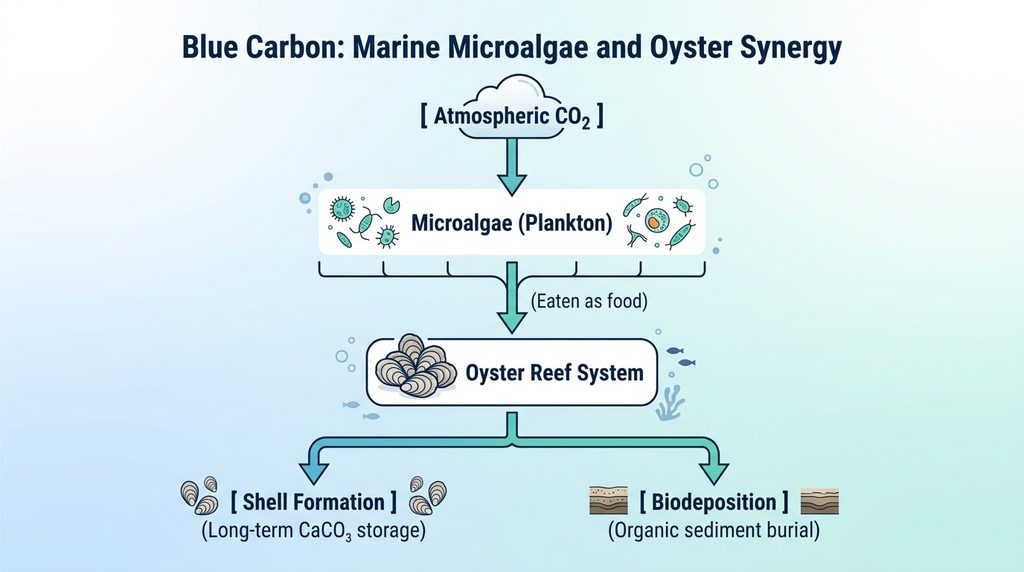
When microalgae and oysters share an ecosystem, they form a self-reinforcing carbon trap.
- Nutrient Recycling: Microalgae absorb excess nitrogen and phosphorus, converting dissolved emissions into energy-rich biomass.
- Accelerated Burial: Oysters consume the microalgae, concentrating organic carbon and depositing it onto the seafloor.
- Habitat Stabilization: Oyster reefs stabilize soft sediments, preventing buried carbon from being stirred up by storm surges or currents and re-oxidized into atmospheric CO2.
Through Integrated Multi-Trophic Aquaculture (IMTA) and coastal reef restoration, leveraging the natural relationship between microalgae and oysters provides a scalable, bio-based strategy for long-term carbon draw-down.